


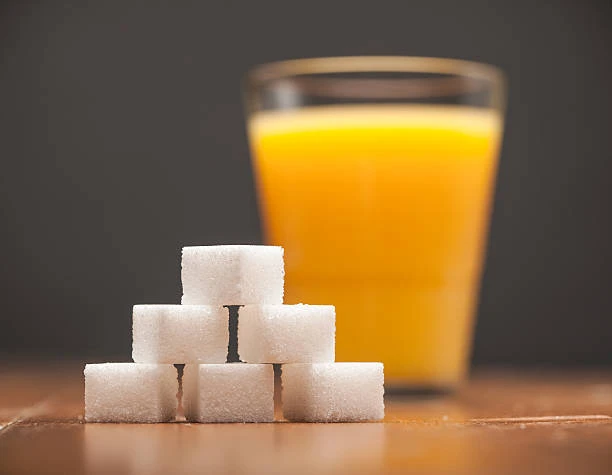
Sugar is the primary ingredient in the majority of beverages, providing a pleasant sweet taste. However, it also contributes a high-calorie content, equivalent to 4.1 calories per gram. The moderate sugar content for full-sugar beverages is around 10 percent . If a consumer consumes 1000ml of full-sugar beverage daily, they would be consuming an additional 410 calories per day. Over time, the accumulation of these calories in the body can have significant side effects.
Salt is a fundamental ingredient in sports drinks and salted soda, and it is also essential for maintaining normal bodily functions. However, excessive salt intake can lead to high blood pressure and excessive retention of water in the body, increasing the burden on the urinary system. Therefore, the World Health Organization recommends that daily salt intake should not exceed 5 grams per person. However, statistics show that the average salt consumption in our country is 12 grams per person, far exceeding the recommendations of the World Health Organization.
On the other hand, during hot summer days and intense physical activity or labor, the body can lose water through a sweat rate of -2 liters per hour. Sweat contains not only water but also a significant amount of electrolytes, mainly sodium chloride. Simply replenishing water alone cannot meet the body's physiological needs and may even lead to hyponatremia, causing further loss of water. Therefore, for consumers who engage in intense exercise or sweat heavily, sports drinks and salted soda must contain a certain amount of salt to replenish electrolytes, as well as a certain amount of sugar for energy. The salt content in sports drinks and salted soda should ideally match the salt content in sweat. Excessive salt content is unnecessary, while insufficient salt content will have limited effects. Generally, the salt content in sports drinks and salted soda ranges from 20 to 80 mmol/L, and the sugar content is between 5 percent to 6 percent .

Hydrogenated vegetable oil, also known as vegetable shortening or artificial butter, is a food industry invention first created by German scientist Wilhelm Normann in the early 20th century. It alternative to animal fat, made from plant oils that are prone to oxidation and have unstable properties. Through the process of hydrogenation, these oils are transformed into a stable form similar to animal fats, or even better, at a lower cost. During hydrogenation, some of the double bonds in the plant oil are saturated, and the carbon atom structure at the ends of the remaining double bonds undergoes a change. The arrangement of hydrogen atoms changes from cis to trans, which is why hydrogenated vegetable oil is also known as a trans fat.
Hydrogenated vegetable oil has a high melting point, good oxidative stability, long shelf life, unique flavor, and good texture. Since its creation, it has been widely used in the beverage and baking industries in products such as coffee creamers, milk teas, coffee beverages, butter cakes, and sandwich cookies. However, since the late 1980s, people have gradually realized the harm of trans fatty acids, which can be even more damaging than animal fats. While animal fats only increase low-density lipoprotein cholesterol (LDL cholesterol or "bad" cholesterol), trans fatty acids not only increase LDL cholesterol but also decrease high-density lipoprotein cholesterol (HDL cholesterol or "good" cholesterol). Prolonged and excessive consumption of hydrogenated vegetable oil can greatly increase the risk of cardiovascular diseases and may also lead to obesity and an increased risk of diabetes.
Therefore, the World Health Organization recommends that the intake of trans fatty acids should not exceed 1 percent of total energy intake, which is equivalent to a maximum daily intake of 2.2 grams for adults. In China, the Ministry of Health banned the use of hydrogenated fats in infant formula and supplementary foods in April 2010. In the United States and Canada, there is mandatory labeling of trans fats in processed foods. In light of this, when selecting ingredients for beverages, the negative impacts of hydrogenated oils should be fully considered and their use should be minimized or avoided whenever possible.

HSF Biotech Company is actively responding to market development by actively developing MCT Oil/Powder (medium-chain triglycerides) from coconut sources, CLA Oil/Powder (conjugated linoleic acid triglycerides) from safflower seeds, and a series of fermented pigments such as beta-carotene and lycopene, astaxanthin, and curcumin. We believe that in the future, HSF Biotech will assist more companies in creating excellent products and become a superstore for natural food and beverage ingredients worldwide.
